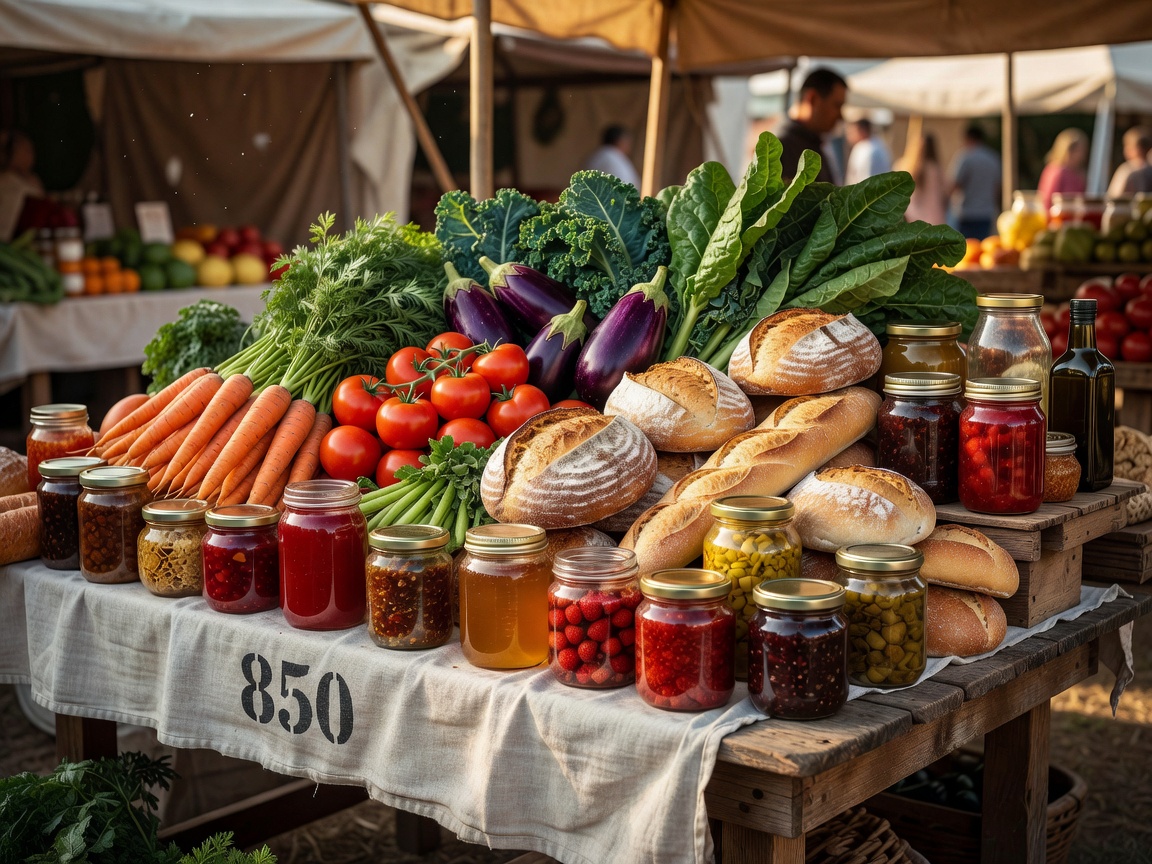
What a food stall can tell you
Food markets bring together different kinds of supply. A stall may sell goods made by the seller, items sourced from nearby producers, or products distributed through a wider network. The display alone does not prove where something was grown or prepared. Check labels and ask clear questions about origin, ingredients and storage.
Mountain geography influences what can be grown and moved. Elevation, slope, climate, soil and transport all matter. Lower valleys may support a different range of fruit and vegetables from higher settlements. Dairy, grains, orchard produce and preserved foods can each reflect local conditions, but there is no single Alpine market menu.
Common categories
- Bread and baked goods: Ask about ingredients, allergens and whether the product is packaged or sold loose.
- Cheese and dairy: Labels can identify ingredients, producer and storage advice. Keep chilled items at a suitable temperature.
- Fruit and vegetables: Variety changes by location and season. Ask whether produce was grown locally or sourced elsewhere.
- Preserves: Jams, pickles and dried foods extend availability. Review ingredients and storage instructions.
- Herbs and honey: Product names, blends and stated origin vary. Read the package rather than assuming a geographic source.
Seasonality without assumptions
Fresh produce availability is local. A crop that is common in one valley may be scarce in another, and weather can shift harvest periods. Markets may also include goods from outside the immediate area. A seasonal event does not mean every stall has seasonal or locally grown products.
Use seasonal context as a prompt for questions. Ask what is currently in season, where it was produced and how it should be stored. If a seller cannot confirm an origin, treat it as unknown. Avoid making purchase decisions from broad regional claims alone.
Labels and unfamiliar products
Read labels before buying packaged food. Look for the product name, ingredients, allergen information, producer or business details, storage advice and any required local-language information. Rules and label formats differ by country. A translated product name may not describe the full recipe.
For loose items, ask the seller about ingredients and possible cross-contact. If you have an allergy or dietary requirement, do not rely on appearance, a casual translation or a general assurance. Request written ingredient information where available. If the answer remains unclear, choose a product with clear labeling or do not buy it.
Buying and carrying food
Bring a reusable bag and consider a separate insulated bag for chilled purchases. Buy temperature-sensitive goods near the end of the visit, then follow the seller’s storage guidance. Avoid leaving perishable food in a warm vehicle. Check customs or transport restrictions before carrying animal products or fresh foods across borders; rules depend on the route and product.
Market sellers may use different payment methods. Carry a practical alternative and check current details where possible. Prices and portions vary; this guide does not quote market prices. Ask about weight, unit and packaging before purchase if the terms are unfamiliar.
Good for
- Visitors interested in regional food and seasonal products.
- Travelers who want to compare ingredients and product origins.
- People planning how to carry or store food purchases safely.
What to know
- Regional style does not confirm product origin or certification.
- Ask about ingredients and allergen cross-contact before buying.
- Seasonal availability and seller information vary by market.